Designing Accessible Election Voting Booths: An Integrated Approach Using Universal Design, Design Thinking, and Ergonomics
DOI:
https://doi.org/10.12928/si.v24i1.614Keywords:
Accessible, Design Thinking, Election Voting Booth, Ergonomic, Universal DesignAbstract
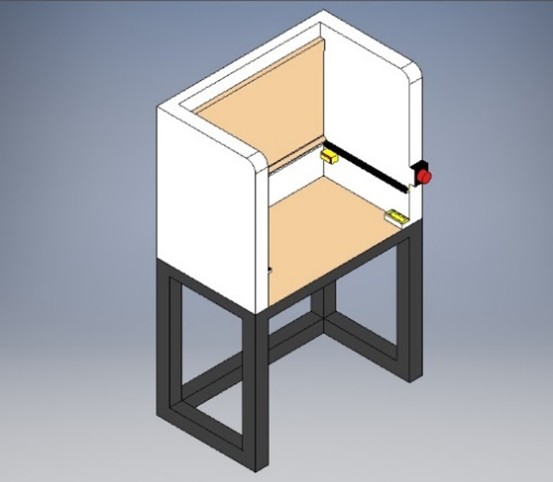
Voting booths are one of the mandatory facilities for holding elections. However, currently, voting booths still face access barriers for people with disabilities who use wheelchairs. There is no standardization of voting booths that are easily accessible for all users and this is an urgent need for voting booth designs that are easily accessible for all users. Therefore, this study aims to design accessible voting booths for all users of voting rights. The method used in this study combines universal design approaches, design thinking, and ergonomics. Data collected included anthropometric data for people with disabilities who use wheelchairs, user need data for universal design-based voting booth designs, and user experience interview data for the empathy stage in design thinking. Data analysis used normality tests, uniformity tests, and adequacy tests for anthropometric data. On user need data, descriptive tests, level categorization and qualitative interpretation were conducted. Then, design thinking stages were carried out until design evaluation. The results of the study obtained an accessible voting booth design with dimensions of 70 cm leg room height; 75.5 cm lower table layer height; 93.2 cm upper table layer height; 92.9 table length; 55 cm table width and 55 cm booth cover height. The contribution of the study is expected to be an accessible voting booth design based on universal design, design thinking and ergonomics to become a technical guideline for the Indonesian general election commission to accommodate voter rights without discrimination.
References
Aakash, C. (2026). For people with disabilities, there are barriers galore to right to voting.
Alemande, D., Ummah, S. M., Priyanto, A. S., & Su-, I. (2024). Accessibility of Political Participation for Different Abbility in The 2024 General Election in DKI Jakarta. 8(2), 78–84. https://doi.org/10.15294/upsj.v8i2.15837
Americans. (2020). ADA Checklist for Polling Places.
Astuti, D., & Suharto, D. G. (2021). Aksesibilitas Penyandang Disabilitas dalam Pemilu 2019 di Kabupaten Sleman. Public Inspiration: Jurnal Administrasi Publik, 6(1), 29–41. https://doi.org/10.22225/pi.6.1.2021.29-41
ai, Y., Kamarudin, K. M., & Alli, H. (2024). A systematic review of research on sitting and working furniture ergonomic from 2012 to 2022: Analysis of assessment approaches. Heliyon, 10(7), e28384. https://doi.org/10.1016/j.heliyon.2024.e28384
Bitonti, A. (2022). Public interest. The Palgrave Encyclopedia of Interest Groups. https://doi.org/10.1007/978-3-030-44556-0_70
Bridger, R. S. (2017). Introduction to Human Factors and Ergonomics. CRC Press.
Celik, E., Sungur, A., & Turkyilmaz, C. C. (2025). Ergonomic Design for inclusive public spaces: a socio-demographic perspective on Child' s ergonomics in Umraniye and Kadikoy, Istanbul. Journal of Asian Architecture and Building Engineering, 24(5), 4404–4419. https://doi.org/10.1080/13467581.2024.2399679
Chung, H. A., Park, J., Hwang, J. B., Kim, H. D., & Jung, H. S. (2016). Design of Ergonomic Front-Entry Sitting Toilet System for People using Wheelchairs. Journal of the Ergonomics Society of Korea, 35(5), 425–437. https://doi.org/10.5143/jesk.2016.35.5.425
ESCAP. (2019). Understanding accessibility. United Nations Economic and Social Commission for Asia and the Pacific. https://doi.org/https://doi.org/10.18356/9789210046855c004
Firdaus, A., Ihsanul, M. S. C., Permana, F. C., & Murbani, A. W. (2025). The Constitutionality of E-Voting in the Transformation of Digital Democracy: A Normative Analysis and Implications for Electoral Legitimacy. Journal of Indonesian Legal Studies, 10(1). https://doi.org/https://doi.org/10.15294/jils.v10i1.21193
Ghosh, N. (2022). Citizenship, rights and persons with disabilities in India. In South Asia Multidisciplinary Academic Journal. journals.openedition.org. https://journals.openedition.org/samaj/7924
Ginting, A. E., Nasution, M. A., & Kusmanto, H. (2021). Pola Rekrutmen Penyelenggara Pemilihan Umum Tingkat Kelompok Penyelenggara Pemungutan Suara di Kecamatan Medan Selayang Pada Pemilihan Umum Serentak Tahun 2019. Perspektif, 10(2), 692–709. https://doi.org/10.31289/perspektif.v10i2.5101
Groulx, M., Freeman, S., & Lemieux, C. (2022). Accessible nature beyond city limits - A scoping review. Journal of Outdoor Recreation and Tourism, 37(January). https://doi.org/10.1016/j.jort.2022.100490
Gupta, A., Yadav, M., & Nayak, B. K. (2025). A Systematic Literature Review on Inclusive Public Open Spaces: Accessibility Standards and Universal Design Principles. Urban Science. https://doi.org/10.3390/urbansci9060181
Hari, P. (2013). Antropometri dan Aplikasinya. Ghara Ilmu.
Harits, D., Kurnia, W. I., & Wibowo, N. A. (2025). Analysis of Antecedent Factors Influencing the Adoption and Conversion of Two-Wheeled Battery Electric Vehicles (BEVs) in East Kalimantan Province. In Spektrum Industri. https://doi.org/10.12928/si.v23i2.467
Hindayanti, H., Septiani, W., & Maulidya, R. (2024). Employee performance assessment model in survey service companies using analytical hierarchy process and Naïve Bayes. In Spektrum Industri. https://pdfs.semanticscholar.org/0751/1a3eb9ba2a09019ea43cc8e3eeeeefa1d39c.pdf
Iftikar, Z. Sutalaksana, Ruhana, A., T. (2006). Teknik Perancangan Sistem Kerja (2nd ed.). ITB.
Ihaab, S. (2022). Designing Accessible Elections: Recommendations from Disability Voting Rights Advocates. Election Law Journal: Rules, Politics, and Policy, 21(1). https://doi.org/https://doi.org/10.1089/elj.2020.06
Inoue, M., & Nakajima, T. (2021). Universal Design Method Considering Physical Characteristics and Physical Load Based on Digital Human Model. Journal of Advanced Manufacturing Technology.15(3), 67–80. https://jamt.utem.edu.my/jamt/article/view/6223
Kirom, M. (2015). Sistem Informasi Geografis Pemetaan Suara Pemilukada Berbasis Open Source Di Kabupaten Jombang. Edutic - Scientific Journal of Informatics Education, 1(1), 1–12. https://doi.org/10.21107/edutic.v1i1.400
KPU. (2023). Peraturan Komisi Pemilihan Umum Nomor 14 Tahun 2023 tentang Perlengkapan Pemungutan Suara, Dukungan Perlengkapan Lainnya, dan Perlengkapan Pemungutan Suara Lainnya dalam Pemilihan Umum.
Lawrence, W., S., M. (2026). International Foundation for Electoral Systems (IFES). The ENABLE Model.
Marisa, D., P. (2020). Rethinking inclusion and disability activism at academic conferences: strategies proposed by a PhD student with a physical disability. Disability & Society, 35(1). https://doi.org/https://doi.org/10.1080/09687599.2019.1619234
Minet, A., Wentzel, D., Raff, S., & Garbas, J. (2024). Design thinking in physical and virtual environments: Conceptual foundations, qualitative analysis, and practical implications. Technological Forecasting and Social Change, 207(February), 123596. https://doi.org/10.1016/j.techfore.2024.123596
Nguyen, T., T. (2022). Application of design thinking to implement innovation policy in teaching table tennis for students – the case of Vietnam National University, Hanoi. Conhecimento & Diversidade Conhecimento & Diversidade , 14(35). https://doi.org/10.18316/rcd.v14i35.10692
Odeyemi, T. I. (2025). From exclusion to inclusion Assessing disability accessibility and participation in Nigeria ’ s 2023 general elections. Pluto Journals. https://doi.org/10.13169/intljofdissocjus.5.3.0005
Putri, E. P., Parinov, I. A., & Wongloucha, C. (2024). Efficiency Evaluation in Indonesia’s Quarrying Industry Using Variable Combinations DEA. In Spektrum Industri. https://journal3.uad.ac.id/index.php/spektrum/article/view/227/91
Rabitsch, A., Moledo, A., Lidauer, M., & Rabitsch, A. (2023). Inclusive elections? The case of persons with disabilities in the European Union European Union. 0461. https://doi.org/10.1080/10220461.2023.2275669
Rangga, F., Nangkula, U., Nazlina, S., Sumarni, I., & Ratri, W. (2020). Evaluation of universal design requirements application in public mosques in bandung. Malaysian Journal of Public Health Medicine. https://doi.org/10.37268/MJPHM/VOL.20/NO.SPECIAL1/ART.692
Ravensbergen, L., Van Liefferinge, M., Isabella, J., Merrina, Z., & El-Geneidy, A. (2022). Accessibility by public transport for older adults: A systematic review. Journal of Transport Geography, 103(July). https://doi.org/10.1016/j.jtrangeo.2022.103408
Rinaldi, A., Viviani, S., & Busciantella-ricci, D. (2025). Urban Furniture Design Strategies to Build Healthy and Inclusive Neighborhoods. Public health and healthcare. https://doi.org/10.3390/su17030859
Robert, B. (2017). Introduction to Human Factors and Ergonomics. CRC Press. https://doi.org/https://doi.org/10.1201/9781351228442
Santana, S. B., Peña-Alonso, C., & Perez-Chacon Espino, E. (2021). Assessing universal accessibility in Spanish beaches. Ocean and Coastal Management, 201(September 2020). https://doi.org/10.1016/j.ocecoaman.2020.105486
Sokhibi, A., Alifiana, M. A., & Asri, V. I. (2022). Ergonomic Design of Hand Sanitizer Dispenser Stand With Foot Pedal Model. In Spektrum Industri. https://doi.org/10.12928/si.v20i1.27
Sokhibi, A., Alifiana, M. A., & Vikha, I. A. (2020). Analysis of ergonomic lighting in the engineering faculty workspace of muria kudus university. In Spektrum Industri. academia.edu. https://www.academia.edu/download/121142521/pdf_21.pdf
Stephanus, A. (2024). Banyak Penyandang Disabilitas Belum Terdaftar sebagai Pemilih Difabel.
Syarif, M. I., Safriani, A., Islam, U., Alauddin, N., & Disabilitas, H. P. (2019). Pemilu di Indonesia. Alauddin Law Develompent (Aldev), 18–25. https://doi.org/10.24252/aldev.v1i3.11894
Taib, R. B., Vivian, B. T., Asyraf, K., & Roslan, B. (2024). E-Voting: A Bibliometric Analysis of Scopus. Hong Kong Journal of Social Sciences. 63. https://doi.org/10.55463/hkjss.issn.1021-3619.63.38
Tutal, O. (2018). Universal Access in Historic Environment and Accessibility of The Haci Hasan Mosque in Eskisehir. Iconarp International J. of Architecture and Planning, 6(1), 126–141. https://doi.org/10.15320/iconarp.2018.41
Virendrakumar, B., Jolley, E., Badu, E., & Schmidt, E. (2018). Disability inclusive elections in Africa: a systematic review of published and unpublished literature. Disability & Society, 33(4), 509–538. https://doi.org/10.1080/09687599.2018.1431108
Watchorn, V., Hitch, D., Tucker, R., Frawley, P., Aedy, K., & Grant, C. (2023). Evaluating universal design of built environments: an empirical study of stakeholder practice and perceptions. Journal of Housing and the Built Environment, 38(3), 1491–1510. https://doi.org/10.1007/s10901-022-09981-x
Wijk, R. van, Baudoin, S. J. M., Ejiogu, B., Regmi, U., & Korfage, I., J. (2025). From words to action: the development of the Neglected Tropical Disease Inclusion Score Card (NISC). In Infectious Diseases of Poverty. Springer. https://doi.org/10.1186/s40249-025-01340-6
Downloads
Published
Issue
Section
License
Copyright (c) 2026 Akh Sokhibi, Budi Cahyo Wibowo, Putri Rachmawati, Salman Alfarisi

This work is licensed under a Creative Commons Attribution-ShareAlike 4.0 International License.





.png)