Trends of Research on Product Quality Model in Sustainable Supply Chain of Automotive Component Industry: Bibliometric Analysis
DOI:
https://doi.org/10.12928/si.v24i2.644Keywords:
Automotive components industry, Product quality model, Supply chain management, Bibliometric analysis, SustainableAbstract
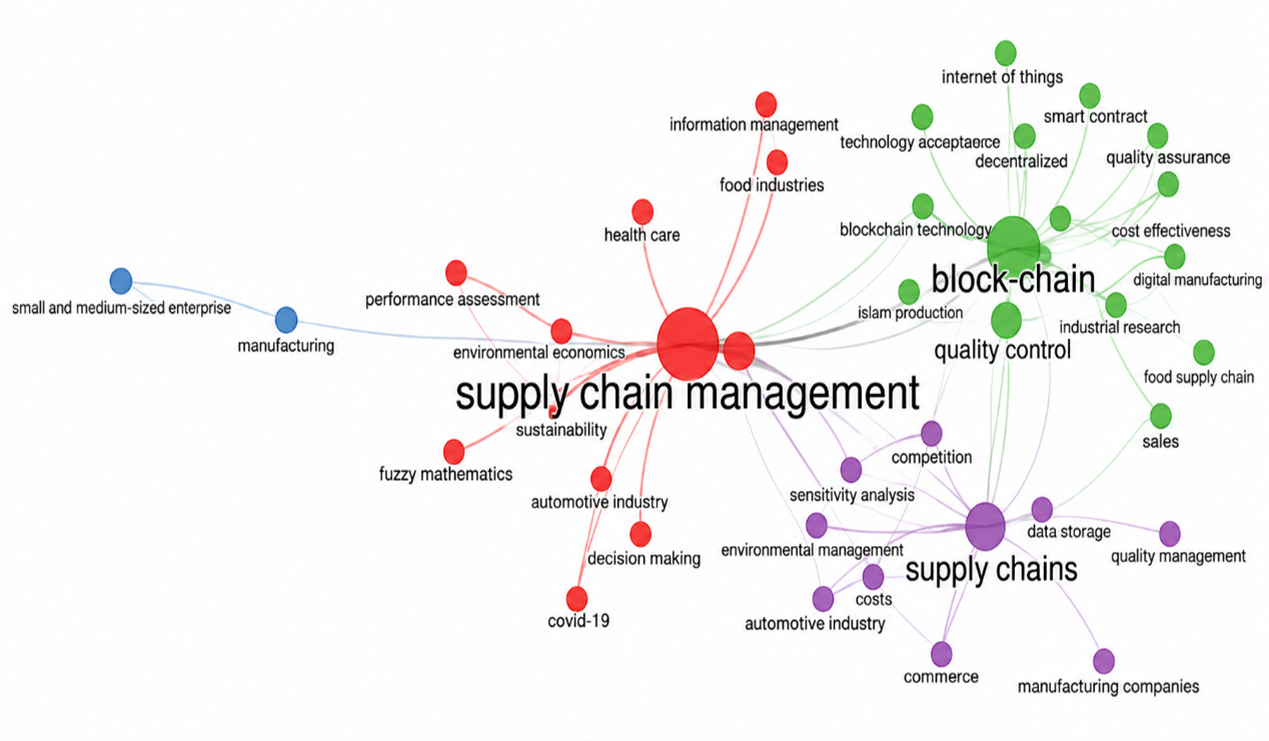
Product quality is a crucial factor that must be maintained throughout the automotive component supply chain. Previous research has generally examined quality management, sustainable supply chain management (SSCM), and digital technologies in the automotive industry, but these topics are still discussed separately. This study aims to map research trends, influential publications, keyword relationships, research gaps, and future research directions related to supply chain quality models in the automotive component industry. A Systematic Literature Review (SLR) combined with bibliometric analysis was conducted using PRISMA-based screening, VOSviewer and R-based bibliometric tools. The results show that publication activity has increased rapidly and is the highest in 2023. Key analysis shows a shift from conventional quality management to digital nutu management supported by Lean-Industry 4.0 integration, Blockchain-based traceability, and sustainable supply chains. The research gap lies in the absence of an integration model that links quality management, SSCM, and printed technology in the automotive supply chain. The main contribution of this research is to map the relationship between these dimensions and clarify the role of strategy in supporting product quality, supply chain sustainability, and digital technology. In addition, this research provides the basis for further research to develop and validate an integrated framework for quality management in sustainable automotive supply chains and supported by digital technology.
References
Abbasi, S., Daneshmand-Mehr, M., & Ghane Kanafi, A. (2023). Green Closed-Loop Supply Chain Network Design During the Coronavirus (COVID-19) Pandemic: a Case Study in the Iranian Automotive Industry. Environmental Modeling & Assessment, 28(1), 69–103. https://doi.org/10.1007/s10666-022-09863-0
Ahmad, R. W., Al Khader, W., Jayaraman, R., Salah, K., Antony, J., & Swarnakar, V. (2023). Integrating Lean Six Sigma with blockchain technology for quality management – a scoping review of current trends and future prospects. The TQM Journal, 35(7), 1609–1631. https://doi.org/10.1108/TQM-06-2022-0181
AISI. (2023). Statistic Distribution. https://www.aisi.or.id/statistic/
Ali, K., Johl, S. K., Muneer, A., Alwadain, A., & Ali, R. F. (2022). Soft and Hard Total Quality Management Practices Promote Industry 4.0 Readiness: A SEM-Neural Network Approach. Sustainability, 14(19), 11917. https://doi.org/10.3390/su141911917
AlKhader, W., Jayaraman, R., Salah, K., Sleptchenko, A., Antony, J., & Omar, M. (2023). Leveraging blockchain and NFTs for quality 4.0 implementation in digital manufacturing. Journal of Manufacturing Technology Management, 34(7), 1208–1234. https://doi.org/10.1108/JMTM-05-2023-0172
Asha, A. A., Dulal, M., & Habib, D. A. (2023). The influence of sustainable supply chain management, technology orientation, and organizational culture on the delivery product quality-customer satisfaction nexus. Cleaner Logistics and Supply Chain, 7, 100107. https://doi.org/10.1016/j.clscn.2023.100107
Bui, L. T. C., Carvalho, M., Pham, H. T., Nguyen, T. T. B., Duong, A. T. B., & Truong Quang, H. (2025). Supply chain quality management 4.0: conceptual and maturity frameworks. International Journal of Quality & Reliability Management, 42(3), 785–808. https://doi.org/10.1108/IJQRM-07-2021-0251
Burgess, P., Sunmola, F., & Wertheim-Heck, S. (2022). Blockchain Enabled Quality Management in Short Food Supply Chains. Procedia Computer Science, 200, 904–913. https://doi.org/10.1016/j.procs.2022.01.288
Ciliberto, C., Szopik-Depczynska, K., Tarczynska-Luniewska, M., Ruggieri, A., & Ioppolo, G. (2021). Enabling the Circular Economy transition: a sustainable lean manufacturing recipe for Industry 4.0. Business Strategy and the Environment, 30(7), 3255–3272. https://doi.org/10.1002/bse.2801
Duan, G. J., & Yan, X. (2020). A Real-Time Quality Control System Based on Manufacturing Process Data. IEEE Access, 8, 208506–208517. https://doi.org/10.1109/ACCESS.2020.3038394
Duong, A., Truong, D., Nguyen Thai, P., Ulhaq, I., Nguyen, L. C., Nguyen, K., Bui Thi Cam, L., & Truong, H. Q. (2026). Driving carbon neutrality and socioeconomic sustainability through Supply Chain Quality Management 4.0: an enterprise information perspective. Journal of Enterprise Information Management, 39(3), 1058–1087. https://doi.org/10.1108/JEIM-04-2025-0249
Escobar, C. A., Macias, D., McGovern, M., Hernandez-de-Menendez, M., & Morales-Menendez, R. (2022). Quality 4.0 – an evolution of Six Sigma DMAIC. International Journal of Lean Six Sigma, 13(6), 1200–1238. https://doi.org/10.1108/IJLSS-05-2021-0091
Fitriana, R., Saragih, J., & Larasati, D. P. (2020). Production quality improvement of Yamalube Bottle with Six Sigma, FMEA, and Data Mining in PT. B. IOP Conference Series: Materials Science and Engineering, 847(1), 012011. https://doi.org/10.1088/1757-899X/847/1/012011
Gohoungodji, P. (2024). Innovation in creative industries: Bibliometrix analysis and research agenda. Journal of Economic Analysis. https://doi.org/10.58567/jea04010002
Heldt, L., & Pikuleva, E. (2025). When upstream suppliers drive traceability: A process study on blockchain adoption for sustainability. International Journal of Physical Distribution & Logistics Management, 55(3), 196–222. https://doi.org/10.1108/IJPDLM-01-2024-0022
Imansuri, F., Chayatunnufus, T., Safril, S., Sumasto, F., Purwojatmiko, B. H., & Salati, D. (2024). Reducing Defects Using DMAIC Methodology in an Automotive Industry. Spektrum Industri, 22(1), 1–13. https://doi.org/10.12928/si.v22i1.171
Kannan, K. S. P. N., & Garad, A. (2020). Competencies of quality professionals in the era of industry 4.0: a case study of electronics manufacturer from Malaysia. International Journal of Quality & Reliability Management, 38(3), 839–871. https://doi.org/10.1108/IJQRM-04-2019-0124
Kovaite, K., Sumakaris, P., & Korsakiene, R. (2022). Sustainability In Creative And Cultural Industries: A Bibliometric Analysis. Creativity Studies, 15(1), 278–298. https://doi.org/10.3846/cs.2022.16565
Kurnia, W. I., Harits, D., & Cahyo, W. N. (2025). The analysis of the digitalization role on towards supply chain resilience and sustainable (Case study: MSME in Balikpapan city). In Spektrum Industri. journal3.uad.ac.id. https://journal3.uad.ac.id/index.php/spektrum/article/view/277
Leontaris, L., Mitsiaki, A., Charalampous, P., & Papageorgiou, E. (2023). A blockchain-enabled deep residual architecture for accountable, in-situ quality control in industry 4.0 with minimal latency. Computers in Industry, 149, 103919. https://doi.org/10.1016/j.compind.2023.103919
Lestari, F., Anne Marie, I., & Sari, E. (2021). Sustainable Lean Six Sigma Competitive Manufacturing Strategy for Luggage Manufacturer. Journal of Modern Manufacturing Systems and Technology, 5(2), 22–34. https://doi.org/10.15282/jmmst.v5i2.6849
Lim, A.-F., Lee, V.-H., Foo, P.-Y., Ooi, K.-B., & Wei-Han Tan, G. (2022). Unfolding the impact of supply chain quality management practices on sustainability performance: an artificial neural network approach. Supply Chain Management: An International Journal, 27(5), 611–624. https://doi.org/10.1108/SCM-03-2021-0129
Lim, A.-F., Ooi, K.-B., Tan, G. W.-H., Cham, T.-H., Alryalat, M. A. A., & Dwivedi, Y. K. (2024). Adapt or die: a competitive digital supply chain quality management strategy. Journal of Enterprise Information Management, 37(2), 698–720. https://doi.org/10.1108/JEIM-09-2022-0345
Liu, Yang, & Shen, B. (2020). Quality Management and Blockchain Adoption in a Supply Chain. IFAC-PapersOnLine, 53(2), 10732–10736. https://doi.org/10.1016/j.ifacol.2020.12.2853
Liu, Yueyang, & Jiang, Y. (2025). The Impact of Supply Chain Quality Management on Firm Performance in Manufacturing Business: The Moderating Role of Digital Intelligence. Sustainability, 17(9), 4165. https://doi.org/10.3390/su17094165
Maganga, D. P., & Taifa, I. W. R. (2023). The readiness of manufacturing industries to transit to Quality 4.0. International Journal of Quality & Reliability Management, 40(7), 1729–1752. https://doi.org/10.1108/IJQRM-05-2022-0148
Marie, I A, Sari, E., Dewayana, T. S., Lestari, F., & Klemes, J. J. (2022). Enhancing sustainable performance using lean quality competitive manufacturing strategy: A case study in the luggage company. Chemical Engineering Transactions. https://doi.org/10.3303/CET2294157
Marie, Iveline Anne, Sari, E., & Hutagalung, A. Y. (2022). Enhancing Sustainable Performance using Lean Competitive Manufacturing Strategy: A Case Study at Motor Vehicle Battery Company. Proceedings of the 2022 International Conference on Engineering and Information Technology for Sustainable Industry, 1–5. https://doi.org/10.1145/3557738.3557845
Nayak, G., & Dhaigude, A. S. (2019). A conceptual model of sustainable supply chain management in small and medium enterprises using blockchain technology. Cogent Economics & Finance, 7(1), 1667184. https://doi.org/10.1080/23322039.2019.1667184
Nur J. R. F., Wahyuni, H. C., & Marodiyah, I. (2024). Quality Improvement of Health Plaster Products With Six Sigma Method and QCDSME Analysis. Spektrum Industri, 22(1), 14–24. https://doi.org/10.12928/si.v22i1.176
Orji, I. J., & U-Dominic, C. M. (2022). Organizational change towards Lean Six Sigma implementation in the manufacturing supply chain: an integrated approach. Business Process Management Journal, 28(5/6), 1301–1342. https://doi.org/10.1108/BPMJ-04-2022-0169
Parast, M. M. (2019). A learning perspective of supply chain quality management: empirical evidence from US supply chains. Supply Chain Management: An International Journal, 25(1), 17–34. https://doi.org/10.1108/SCM-01-2019-0028
Praharsi, Y., Jami’in, M. A., Suhardjito, G., & Wee, H. M. (2021). The application of Lean Six Sigma and supply chain resilience in maritime industry during the era of COVID-19. International Journal of Lean Six Sigma, 12(4), 800–834. https://doi.org/10.1108/IJLSS-11-2020-0196
Rahmawati, B. D., & Maharani, N. N. B. (2023). Assessing Cause of Defect Using Failure Mode and Effect Analysis. Spektrum Industri, 21(1), 1–7. https://doi.org/10.12928/si.v21i1.91
Ramkumar, G., Kasat, K., Khader P, R. A., Muhammed P K, N., Raghu, T., & Chhabra, S. (2022). Quality enhanced framework through integration of blockchain with supply chain management. Measurement: Sensors, 24, 100462. https://doi.org/10.1016/j.measen.2022.100462
Rana, J. A., & Jani, S. Y. (2023). Enhancing sustainable supply chain performance by adopting sustainable lean six sigma-Industry 4.0 practices. Management of Environmental Quality: An International Journal, 34(4), 1198–1221. https://doi.org/10.1108/MEQ-04-2022-0122
Rupasinghe, H. D., & Wijethilake, C. (2021). The impact of leanness on supply chain sustainability: examining the role of sustainability control systems. Corporate Governance: The International Journal of Business in Society, 21(3), 410–432. https://doi.org/10.1108/CG-06-2020-0217
Salikhov, J., Hayrutdinov, S., & Muminov, T. K. (2023). Blockchain-Enabled Sustainable Supply Chain under Information Sharing and Recovery Quality Efforts. Sustainability, 15(5), 3929. https://doi.org/10.3390/su15053929
Sharma, M., & Joshi, S. (2023). Digital supplier selection reinforcing supply chain quality management systems to enhance firm’s performance. The TQM Journal, 35(1), 102–130. https://doi.org/10.1108/TQM-07-2020-0160
Sheel, A., & Nath, V. (2019). Effect of blockchain technology adoption on supply chain adaptability, agility, alignment and performance. Management Research Review, 42(12), 1353–1374. https://doi.org/10.1108/MRR-12-2018-0490
Shokouhyar, S., Pahlevani, N., & Mir Mohammad Sadeghi, F. (2019). Scenario analysis of smart, sustainable supply chain on the basis of a fuzzy cognitive map. Management Research Review, 43(4), 463–496. https://doi.org/10.1108/MRR-01-2019-0002
Sony, M., Antony, J., & Douglas, J. A. (2020). Essential ingredients for the implementation of Quality 4.0. The TQM Journal, 32(4), 779–793. https://doi.org/10.1108/TQM-12-2019-0275
Statistik, B. P. (2023). Perkembangan Jumlah Kendaraan Bermotor Menurut Jenis - Tabel Statistik - Badan Pusat Statistik Indonesia. https://www.bps.go.id/id/statistics-table/2/NTcjMg==/perkembangan-jumlah-kendaraan-bermotor-menurut-jenis--unit-.html
Treiblmaier, H., & Garaus, M. (2023). Using blockchain to signal quality in the food supply chain: The impact on consumer purchase intentions and the moderating effect of brand familiarity. International Journal of Information Management, 68, 102514. https://doi.org/10.1016/j.ijinfomgt.2022.102514
Tronnebati, I., Jawab, F., Frichi, Y., & Arif, J. (2024). Green Supplier Selection Using Fuzzy AHP, Fuzzy TOSIS, and Fuzzy WASPAS: A Case Study of the Moroccan Automotive Industry. Sustainability, 16(11), 4580. https://doi.org/10.3390/su16114580
Valdez-de la Rosa, L. M., Villarreal-Villarreal, L. A., & Alarcón-Martínez, G. (2021). Quality and innovation as drivers for manufacturing competitiveness of automotive parts suppliers. The TQM Journal, 33(5), 966–986. https://doi.org/10.1108/TQM-12-2018-0218
Van, N. T., Pham, H. T., Ha, H. M., & Tran, T. T. T. (2024). An integrated model of supply chain quality management, Industry 3.5 and innovation to improve manufacturers’ performance – a case study of Vietnam. International Journal of Logistics Research and Applications, 27(2), 261–283. https://doi.org/10.1080/13675567.2022.2059457
Westphal, E., Leiding, B., & Seitz, H. (2023). Blockchain-based quality management for a digital additive manufacturing part record. Journal of Industrial Information Integration, 35, 100517. https://doi.org/10.1016/j.jii.2023.100517
Yu, Y., & Huo, B. (2018). Supply chain quality integration: relational antecedents and operational consequences. Supply Chain Management: An International Journal, 23(3), 188–206. https://doi.org/10.1108/SCM-08-2017-0280
Zhou, X., Lu, H., & Kumar Mangla, S. (2024). The impact of digital traceability on sustainability performance: investigating the roles of sustainability-oriented innovation and supply chain learning. Supply Chain Management: An International Journal, 29(3), 497–522. https://doi.org/10.1108/SCM-01-2023-0047
Downloads
Published
Issue
Section
License
Copyright (c) 2026 Zenny Hunusalela, Parwadi Moengin, Iveline Anne Marie, Rina Fitriana, Nadiah Ahmad

This work is licensed under a Creative Commons Attribution-ShareAlike 4.0 International License.