Effects of Physical Work Environment Factors on Task Duration and Error in Manual Banking Transactions
DOI:
https://doi.org/10.12928/si.v24i2.657Keywords:
ANOVA, CRD, Duration, Error, Manual transactionAbstract
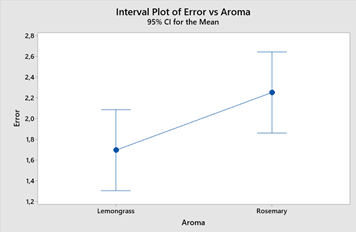
The manual cash handling tasks require consistent attention and precision and can be affected by the physical working conditions. The aim of this study is to examine the effects of lighting, temperature, and aroma on the task completion time and the counting errors in simulated banking teller activities. In a laboratory experiment, six participants (three males and three females) aged between 20 and 24 years were selected based on their similar money-counting skills. We used a completely randomized factorial design with 2 × 2 × 2 factors with two lighting levels (150 and 350 lux), two temperatures (24 and 26 °C) and two aromas (lemongrass and rosemary). Performance measures were time to complete the task and number of counting errors. Statistical tests including analysis of variance (ANOVA) followed by Tukey's post hoc test where applicable were used to analyze the data. The results showed that lighting and aroma had a significant impact on the task performance, especially in female participants, and temperature had a significant impact on the task completion time in male participants. Within the experimental settings, the optimal condition was identified as the combination of 150 lux, 24°C, and the lemongrass aroma. These results suggest that physical workplace conditions may influence the speed and accuracy of simulated cash-handling tasks, with possible differences in response between male and female participants. This research provides preliminary experimental evidence to consider environmental factors in the ergonomic design of workplaces for manual banking activities.
References
Ahmed, S. K. (2024). How to choose a sampling technique and determine sample size for research: A simplified guide for researchers. Oral Oncology Reports, 12(September), 100662. https://doi.org/10.1016/j.oor.2024.100662
Andreucci, M. B., Marvuglia, A., Baltov, M., & Hansen, P. (2021). Rethinking Sustainability Towards a Regenerative Economy (C. C. Konijnendijk (ed.)). Springer.https://doi.org/10.1007/978-3-030-71819-0
Ansori, N., Rolis, F., Pratama, A., Agustina, F., Utami, I. D., & Widiaswanti, E. (2025). Compromise Parameters of Temperature, Light, and Noise in Confined Spaces on Work Duration and Number of Errors. Eng. Proc. 2025, 84(1), 4; https://doi.org/10.3390/engproc2025084004
Ansori, N., Widiaswanti, E., & Krestiyanto, D. (2026). The Optimum Parameters for Material Flow Speed, Working Noise, and Material Flow Direction for Physical and Mental Workload. 17(1), 1–10. https://doi.org/10.24425/mper.2026.158642
Astuti, R. D., Suhardi, B., Laksono, P. W., & Susanto, N. (2024). Investigating the Relationship between Noise Exposure and Human Cognitive Performance: Attention, Stress, and Mental Workload Based on EEG Signals Using Power Spectrum Density. Applied Sciences (Switzerland), 14(7). https://doi.org/10.3390/app14072699
Belany, P., Hrabovsky, P., Florkova, Z., & Kantova, N. C. (2024). the Impact of Workplace Lighting on Employee Well-Being and Productivity: a Measurement Study. System Safety: Human - Technical Facility - Environment, 6(1), 277–288. https://doi.org/10.2478/czoto-2024-0030
Bjarne Olesen, B. W., & Ash Rae, M. (2000). Guidelines For Comfort. Ashrae, 41–46. https://www.aivc.org/resource/guidelines-comfort
Boyce, P. R. (2022). Light, lighting and human health. Lighting Research and Technology, 54(2), 101–144. https://doi.org/10.1177/14771535211010267
Broday, E. E., & De Paula Xavier, A. A. (2020). A method for predicting the Actual Percentage of Dissatisfied (APD) through a simple proposition of thermal comfort zones in a working environment. Work, 67(3), 599–609. https://doi.org/10.3233/wor-203215
Bueno, A. M., de Paula Xavier, A. A., & Broday, E. E. (2021). Evaluating the connection between thermal comfort and productivity in buildings: A systematic literature review. Buildings, 11(6). https://doi.org/10.3390/buildings11060244
Cash, P., Isaksson, O., Maier, A., & Summers, J. (2022). Sampling in design research: Eight key considerations. Design Studies, 78, 101077. https://doi.org/10.1016/j.destud.2021.101077
Cena, K., & de Dear, R. J. (1999). Field study of occupant comfort and office thermal environments in a hot, arid climate. ASHRAE Transactions, 105.
Chenarboo, F., Hekmatshoar, R., & Fallahi, M. (2022). The influence of physical and mental workload on the safe behavior of employees in the automobile industry. Heliyon, 8(10), e11034. https://doi.org/10.1016/j.heliyon.2022.e11034
Dianat, I., Sedghi, A., Bagherzade, J., Jafarabadi, M. A., & Stedmon, A. W. (2013). Objective and subjective assessments of lighting in a hospital setting: Implications for health, safety and performance. Ergonomics, 56(10), 1535–1545. https://doi.org/10.1080/00140139.2013.820845
Digiesi, S., Manghisi, V. M., Facchini, F., Klose, E. M., Foglia, M. M., & Mummolo, C. (2020). Heart rate variability based assessment of cognitive workload in smart operators. Management and Production Engineering Review, 11(3), 56–64. https://doi.org/10.24425/mper.2020.134932
Doohan, M. A., Watzek, J. T., King, N., White, M. J., & Stewart, I. B. (2023). Does increased core temperature alter cognitive performance during exerciseinduced heat strain? A narrative review. Journal of Applied Physiology, 135(1), 35–52. https://doi.org/10.1152/japplphysiol.00070.2023
Dupont, L., Bouckaert, F., & Detraux, J. (2023). Hoge omgevingstemperatuur en cognitieve prestaties binnen werksetting: systematische review. Tijdschrift Voor Psychiatrie, 65(5), 316–322. https://www.tijdschriftvoorpsychiatrie.nl/media/6/65-2023-5-artikel-dupont.pdf
Ffytche, D., Blom, J. D., & Catani, M. (2011). Neuropsychiatry Review series : Disorders of Visual perception. To cite this version : HAL Id : hal-00587980. HAL Open Science.
Freivalds, A., & Niebel, B. W. (2012). Niebel’s Methods, Standards, and Work Design Thirteenth Edition. McGraw-Hill.
Greenfield, A. M., Alba, B. K., Giersch, G. E. W., & Seeley, A. D. (2023). Sex differences in thermal sensitivity and perception: Implications for behavioral and autonomic thermoregulation. Physiology and Behavior, 263(May), 1–33. https://doi.org/10.1016/j.physbeh.2023.114126
Guo, J., Chen, T., Xie, Z., & Or, C. K. (2021). Effects of interventions to reduce the negative consequences of interruptions on task performance: A systematic review, meta-analysis, and narrative synthesis of laboratory studies. Applied Ergonomics, 97(November 2019), 103506. https://doi.org/10.1016/j.apergo.2021.103506
Hafiar, H., Setianti, Y., Subekti, P., & Sani, A. (2020). Blind Code pada Uang Kertas Rupiah Pesan Komunikasi dan Komunikasi Pesan kepada Publik Disabilitas Netra. Jurnal Kawistara, 10(3), 328. https://doi.org/10.22146/kawistara.48865
Herz, R. S. (2009). Aromatherapy facts and fictions: A scientific analysis of olfactory effects on mood, physiology and behavior. International Journal of Neuroscience, 119(2), 263–290. https://doi.org/10.1080/00207450802333953
Howes, M. J. R., Perry, N. S. L., Vásquez-Londoño, C., & Perry, E. K. (2020). Role of phytochemicals as nutraceuticals for cognitive functions affected in ageing. British Journal of Pharmacology, 177(6), 1294–1315. https://doi.org/10.1111/bph.14898
Jafri, R., Althbiti, S. M. M., Alattas, N. A. A., Albraiki, A. A. A., & Almuhawwis, S. H. A. (2022). Tac-Trace: A Tangible User Interface-Based Solution for Teaching Shape Concepts to Visually Impaired Children. IEEE Access, 10(October), 131153–131165. https://doi.org/10.1109/ACCESS.2022.3228455
Jahan, I., Sadia, E., & Ferdousi, S. (2024). Effect of Lemongrass (Cymbopogon Citratus) Essential Oil Inhalation on Brain Waves in Healthy Female Adults in Awake State by Power Spectral Analysis of Quantitative Electro-encephalogram: A Self-controlled Study. Journal of Armed Forces Medical College, Bangladesh, 19(2), 32–36. https://doi.org/10.3329/jafmc.v19i2.72455
Kacorri, H., Kitani, K. M., Bigham, J. P., & Asakawa, C. (2017). People with visual impairment training personal object recognizers: Feasibility and challenges. Conference on Human Factors in Computing Systems - Proceedings, 2017-May(May 2017), 5839–5849. https://doi.org/10.1145/3025453.3025899
Kah, P., Edigbe, G. O., Ndiwe, B., & Kubicek, R. (2022). Assessment of arc stability features for selected gas metal arc welding conditions. SN Applied Sciences, 4(10). https://doi.org/10.1007/s42452-022-05150-5
Kazemi, R., Choobineh, A., Taheri, S., & Rastipishe, P. (2018). Comparing task performance, visual comfort and alertness under different lighting sources: An experimental study. EXCLI Journal, 17, 1018–1029. https://doi.org/10.17179/excli2018-1676
Kepmenkes RI No. 1405/MENKES/SK/XI. (2020). Keputusan Menteri Kesehatan RI Nomor: 1995/Menkes. In Geneva: World Health Organization (Vol. 7, Issue 1, pp. 32–37).
Konstantzos, I., Sadeghi, S. A., Kim, M., Xiong, J., & Tzempelikos, A. (2020). The effect of lighting environment on task performance in buildings – A review. Energy and Buildings, 226, 110394. https://doi.org/10.1016/j.enbuild.2020.110394
Lakens, D. (2013). Calculating and reporting effect sizes to facilitate cumulative science: A practical primer for t-tests and ANOVAs. Frontiers in Psychology, 4(NOV), 1–12. https://doi.org/10.3389/fpsyg.2013.00863
Lan, L., Lian, Z., & Pan, L. (2010). The effects of air temperature on office workers’ well-being, workload and productivity-evaluated with subjective ratings. Applied Ergonomics, 42(1), 29–36. https://doi.org/10.1016/j.apergo.2010.04.003
Lan, L., Tang, J., Wargocki, P., Wyon, D. P., & Lian, Z. (2022). Cognitive performance was reduced by higher air temperature even when thermal comfort was maintained over the 24–28°C range. Indoor Air, 32(1), 1–15. https://doi.org/10.1111/ina.12916
Li, S., Zhang, X., Li, Y., Gao, W., Xiao, F., & Xu, Y. (2023). A comprehensive review of impact assessment of indoor thermal environment on work and cognitive performance - Combined physiological measurements and machine learning. Journal of Building Engineering, 71(July), 1–47. https://doi.org/10.1016/j.jobe.2023.106417
Lin, X., Guo, C., Wargocki, P., Tanabe, S. Ichi, Tham, K. W., & Lan, L. (2025). The effects of temperature on work performance in the typical office environment: A meta-analysis of the current evidence. Building and Environment, 269(December 2024), 112488. https://doi.org/10.1016/j.buildenv.2024.112488
Loske, D., Klumpp, M., Keil, M., & Neukirchen, T. (2021). Logistics Work, Ergonomics and Social Sustainability: Empirical Musculoskeletal System Strain Assessment in Retail Intralogistics. Logistics, 5(4). https://doi.org/10.3390/logistics5040089
Marrs, H., & Sigler, E. A. (2012). Male academic performance in college: The possible role of study strategies. Psychology of Men and Masculinity, 13(2), 227–241. https://doi.org/10.1037/a0022247
Memon, M. A., Thurasamy, R., Ting, H., & Cheah, J. H. (2025). Purposive Sampling: a Review and Guidelines for Quantitative Research. Journal of Applied Structural Equation Modeling, 9(1), 1–23. https://doi.org/10.47263/JASEM.9(1)01
Moss, M., & Oliver, L. (2012). Plasma 1,8-cineole correlates with cognitive performance following exposure to rosemary essential oil aroma. Therapeutic Advances in Psychopharmacology, 2(3), 103–113. https://doi.org/10.1177/2045125312436573
Moss, M., Smith, E., Milner, M., & McCready, J. (2018). Acute ingestion of rosemary water: Evidence of cognitive and cerebrovascular effects in healthy adults. Journal of Psychopharmacology, 32(12), 1319–1329. https://doi.org/10.1177/0269881118798339
Mostafavi, A., Xu, T. B., & Kalantari, S. (2023). Assessing the Effects of Illuminance and Correlated Color Temperature on Emotional Responses and Lighting Preferences Using Virtual Reality. Lighting Behavior. https://arxiv.org/pdf/2307.10969
Mullol, J., Alobid, I., Marino-Sanchez, F., Quinto, L., De Haro, J., Bernal-Sprekelsen, M., Valero, A., Picado, C., & Marin, C. (2012). Furthering the understanding of olfaction, prevalence of loss of smell and risk factors: A population-based survey (OLFACAT study). BMJ Open, 2(6). https://doi.org/10.1136/bmjopen-2012-001256
Nematchoua, M. K., Ricciardi, P., Orosa, J. A., Asadi, S., & Choudhary, R. (2019). Influence of indoor environmental quality on the self-estimated performance of office workers in the tropical wet and hot climate of Cameroon. Journal of Building Engineering, 21, 141–148. https://doi.org/10.1016/j.jobe.2018.10.007
Ok, E., Kocatepe, V., & Ünver, V. (2021). The effect of the rose essential oil aroma on university students’ learning and short-term memory: A randomized controlled trial. Journal of Clinical Medicine of Kazakhstan, 18(1), 32–37. https://doi.org/10.23950/jcmk/9651
Park, J. Y., Min, B.-K., Jung, Y.-C., Pak, H., Jeong, Y.-H., & Kim, E. (2013). Illumination Influences Working Memory: An EEG Study. Neouroscienceuroscience, 247, 386–394. https://doi.org/10.1016/j.neuroscience.2013.05.016
Pimpong, M. (2023). Work Environmental Factors and its Impact on Employee Productivity: The Mediating Role of Employee Commitment. E-Journal of Humanities, Arts and Social Sciences, 4(8), 916–935. https://doi.org/10.38159/ehass.2023482
Rahman, S. (2018). Effect of Illuminance on Human Work Performance, an assessment based on Lighting Laboratory experiment. AUST Journal Of Science and Technology, 7(August 2018).
Reschke, M. F., Cohen, H. S., Cerisano, J. M., Clayton, J. A., Cromwell, R., Danielson, R. W., Hwang, E. Y., Tingen, C., Allen, J. R., & Tomko, D. L. (2014). Effects of sex and gender on adaptation to space: Neurosensory systems. Journal of Women’s Health, 23(11), 959–962. https://doi.org/10.1089/jwh.2014.4908
Reyes-Cruz, G., Fischer, J. E., & Reeves, S. (2020). Reframing Disability as Competency: Unpacking Everyday Technology Practices of People with Visual Impairments. Conference on Human Factors in Computing Systems - Proceedings, 1–13. https://doi.org/10.1145/3313831.3376767
Rezaie, S. M., Shahabinejad, M., Loripoor, M., & Sayadi, A. R. (2021). The effect of aromatherapy with lavender essential oil on the working memory of women with multiple sclerosis. Journal of Medicine and Life, 14(6), 776–781. https://doi.org/10.25122/jml-2020-0115
Riesthuis, P., Otgaar, H., Bogaard, G., & Mangiulli, I. (2023). Factors affecting the forced confabulation effect: a meta-analysis of laboratory studies. Memory, 31(5), 635–651. https://doi.org/10.1080/09658211.2023.2185931
Rufli, M., Scaramuzza, D., & Siegwart, R. (2008). Automatic detection of checkerboards on blurred and distorted images. 2008 IEEE/RSJ International Conference on Intelligent Robots and Systems, IROS, 3121–3126. https://doi.org/10.1109/IROS.2008.4650703
Sapp, D. G., Cormier, B. M., Rockwood, K., Howlett, S. E., & Heinze, S. S. (2023). The frailty index based on laboratory test data as a tool to investigate the impact of frailty on health outcomes: a systematic review and meta-analysis. Age and Ageing, 52(1), 1–13. https://doi.org/10.1093/ageing/afac309
Schafer, L., Schriever, V. A., & Croy, I. (2021). Human olfactory dysfunction: causes and consequences. Cell and Tissue Research, 383(1), 569–579. https://doi.org/10.1007/s00441-020-03381-9
Sekaran, U., & Bougie, R. (2016). Research Methods for Business (Seventh).
Serdar, C. C., Cihan, M., Yücel, D., & Serdar, M. A. (2021). Sample size, power and effect size revisited: Simplified and practical approachin pre-clinical, clinical and laboratory studies. Biochemia Medica, 31(1), 1–27. https://doi.org/10.11613/BM.2021.010502
Snell, S. A., Swart, J., Morris, S., & Boon, C. (2023). The HR ecosystem: Emerging trends and a future research agenda. Human Resource Management, 62(1), 5–14. https://doi.org/10.1002/hrm.22158
Sorokowski, P., Karwowski, M., Misiak, M., Marczak, M. K., Dziekan, M., Hummel, T., & Sorokowska, A. (2019). Sex differences in human olfaction: A meta-analysis. Frontiers in Psychology, 10(FEB), 1–9. https://doi.org/10.3389/fpsyg.2019.00242
Sriraksa, N., Kaewwongse, M., Phachonpai, W., & Hawiset, T. (2018). Effects of Lemongrass (Cymbopogon citratus) Essential Oil Inhalation on Cognitive Performance and Mood in Healthy Women. Thai Pharmaceutical and Health Science Journal, 13(2), 80 – 88. https://ejournals.swu.ac.th/index.php/pharm/article/view/10226/8574
Stupuriene, G., Jevsikova, T., & Juskeviciene, A. (2022). Solving Ecological Problems through Physical Computing to Ensure Gender Balance in STEM Education. Sustainability (Switzerland), 14(9). https://doi.org/10.3390/su14094924
Tepla, M., & Distler, P. (2025). The impact of long-term inquiry-based science education on students’ motivation and knowledge acquisition: the role of gender, subject, and level of inquiry. Humanities and Social Sciences Communications, 12(1), 1–12. https://doi.org/10.1057/s41599-025-04437-3
Triscoli, C., Ackerley, R., & Sailer, U. (2014). Touch satiety: Differential effects of stroking velocity on liking and wanting touch over repetitions. PLoS ONE, 9(11), 1–8. https://doi.org/10.1371/journal.pone.0113425
Triyanti, V., Iridiastadi, H., & Aribowo, W. (2024). Working with cognitive load task: mental fatigue, sleepiness, and performance. 8(2), 9307–9314. https://doi.org/10.15282/jmmst.v8i2.10789
Utama, D. Q., Mengko, T. L. R., Mengko, R., & Aulia, M. N. (2016). Color Blind Test Quantification using RGB Primary Color Cluster. International Conference on Information Technology Systems and Innovation (ICITSI), 24–27. https://doi.org/10.1109/ICITSI.2016.7858242
Veitch, J. A. (2001). Psychological processes influencing lighting quality. Journal of the Illuminating Engineering Society, 30(1), 124–140. https://doi.org/10.1080/00994480.2001.10748341
Wang, Q., Xu, H., Gong, R., & Cai, J. (2015). Investigation of visual fatigue under LED lighting based on reading task. Optik, 126(15–16), 1433–1438. https://doi.org/10.1016/j.ijleo.2015.04.033
Warburton, T., Grange, S. K., Hopkins, J. R., Andrews, S. J., Lewis, A. C., Owen, N., Jordan, C., Adamson, G., & Xia, B. (2023). The impact of plug-in fragrance diffusers on residential indoor VOC concentrations. Environmental Science: Processes and Impacts, 25(4), 805–817. https://doi.org/10.1039/d2em00444e
Young, M. S., Brookhuis, K. A., Wickens, C. D., & Hancock, P. A. (2015). State of science: mental workload in ergonomics. In Ergonomics (Vol. 58, Issue 1, pp. 1–17). Taylor & Francis. https://doi.org/10.1080/00140139.2014.956151
Zhenjing, G., Chupradit, S., Ku, K. Y., Nassani, A. A., & Haffar, M. (2022). Impact of Employees’ Workplace Environment on Employees’ Performance: A Multi-Mediation Model. Frontiers in Public Health, 10(May). https://doi.org/10.3389/fpubh.2022.890400
Downloads
Published
Issue
Section
License
Copyright (c) 2026 Nachnul Ansori, Silvia Nur Lathiifa, Ernaning Widiaswanti; Issa Dyah Utami

This work is licensed under a Creative Commons Attribution-ShareAlike 4.0 International License.